跳至主要内容

Google Coral could make manufacturing more efficiently

Local AI can maximize throughput and increase safety in manufacturing processes
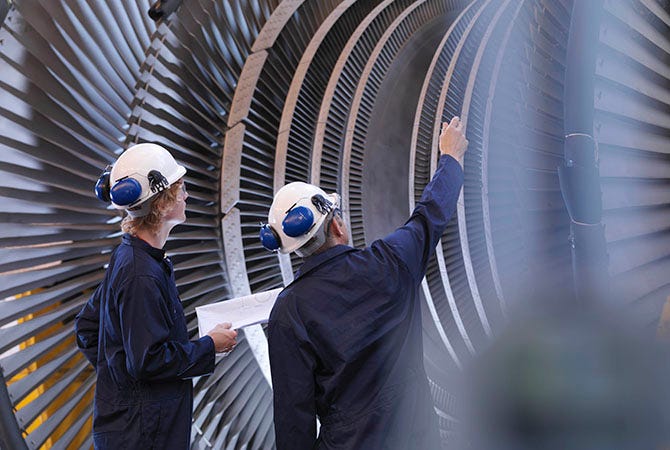
Edge AI use cases in industries are wide ranging, from quality control in manufacturing lines to safety monitoring of human-machine interaction. These applications need fast, low latency inference without compromising on accuracy.
20% of leading manufacturers will rely on embedded intelligence by 2021. AI, IoT and blockchain applications are expected to increase execution times by up to 25%.
QUALITY CONTROL:
Missing defects can be costly and industries are deploying local AI at a rapid pace. Coral can enable visual inspection systems that can detect faults with high accuracy in situations where human vision falls short.
PREDICTIVE MAINTENANCE:
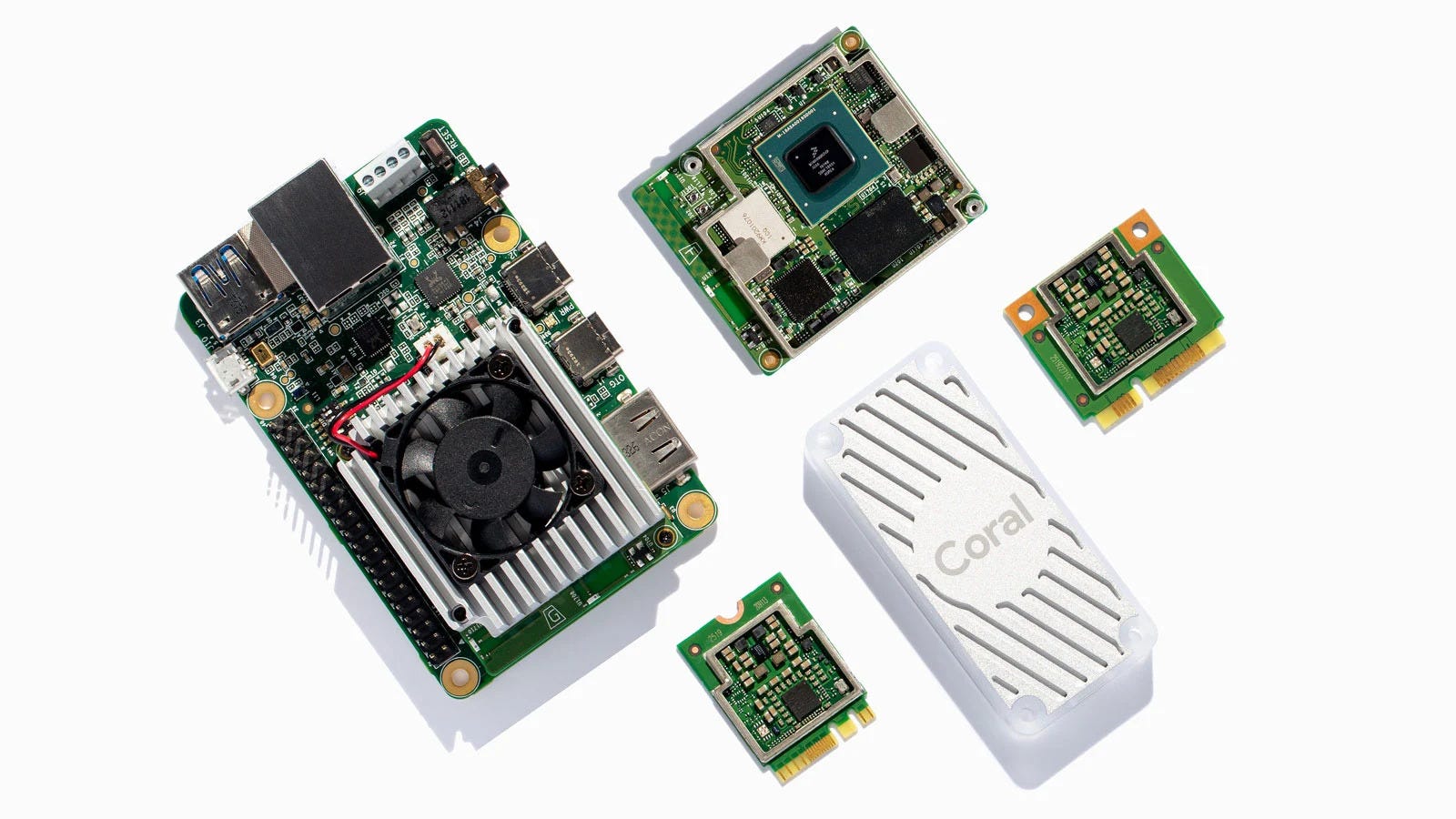
With Coral, equipment manufacturers can incorporate features that monitor and analyze machine behavior and warn of impending failures. That can inform a system of predictive maintenance to avoid expensive downtime.
WORKER SAFETY
Using Coral enabled cameras and other local sensors monitoring a job site, operators can give robots and vehicles the ability to operate safely alongside human workers, preventing collisions and making collaborative work with machines a reality.
Incident and avoidance data pooled into predictive models allow site managers to anticipate activities that may prove dangerous and make process changes.
more details about Google Coral, you can go for here: https://store.gravitylink.com/global

评论

此博客中的热门博文

10 questions you should know about Google Edge TPU

1. What is the Edge TPU? The Edge TPU is a small ASIC designed by Google that provides high performance ML inferencing for low-power devices. For example, it can execute state-of-the-art mobile vision models such as MobileNet V2 at almost 400 FPS, in a power efficient manner. Google offers multiple products that include the Edge TPU built-in. Two Edge TPU chips on the head of a US penny 2. What machine learning frameworks does the Edge TPU support? TensorFlow Lite only. 3. What type of neural networks does the Edge TPU support? The first-generation Edge TPU is capable of executing deep feed-forward neural networks (DFF) such as convolutional neural networks (CNN), making it ideal for a variety of vision-based ML applications. 4. How do I create a TensorFlow Lite model for the Edge TPU? You need to convert your model to TensorFlow Lite and it must be quantized using either quantization-aware training (recommended) or full integer post-training quantization. (To create a compatible model...

How to Retrain an object detection model

This tutorial shows you how to retrain an object detection model to recognize a new set of classes. You'll use a technique called transfer learning to retrain an existing model and then compile it to run on an Edge TPU device—you can use the retrained model with either the Coral Dev Board or the Coral USB Accelerator. Specifically, this tutorial shows you how to retrain a MobileNet V1 SSD model (originally trained to detect 90 objects from the COCO dataset) so that it detects two pets: Abyssinian cats and American Bulldogs (from the Oxford-IIIT Pets Dataset). But you can reuse these procedures with your own image dataset, and with a different pre-trained model. The steps below show you how to perform transfer-learning using either last-layers-only or full-model retraining. Most of the steps are the same; just keep an eye out for the different commands depending on the technique you desire. Note: These instructions do not require deep experience with TensorFlow o...

Introducing Google Coral Dev Board

Introducing Google Coral Dev Board (Part 1) Introducing Google Coral Dev Board (Part 2) Introducing Google Coral Dev Board (Part 3) Introducing Google Coral Dev Board (Part 4)