跳至主要内容

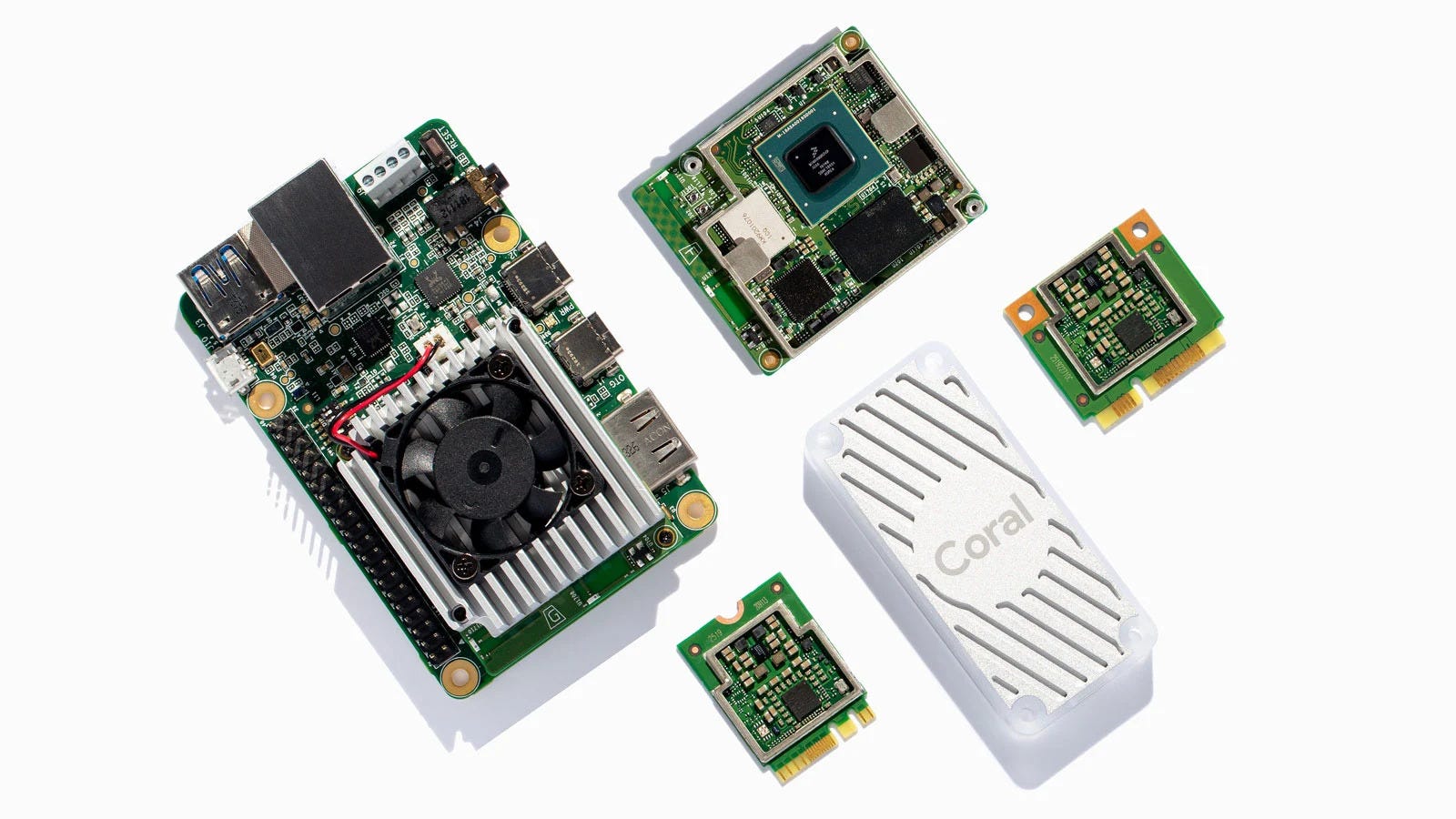
Google Coral Edge TPU for Automotive Solution

Local AI not only helps vehicles drive more safely, it is also used to ensure driver attentiveness, provide seamless control of on-board systems, and verify the smooth operation of countless moving parts under the hood.
DRIVER ATTENTIVENESS
Coral can be deployed in vehicle dash systems to help assess driver and passenger behavior (gaze tracking, pupil dilation, speech slurring) that indicates a safety risk either to occupants of the car, or to others on the road, and allow real-time warnings or action be taken. This device can also augment other automotive safety measures such as seat belt detection and alerts for a child left in a car seat.
PREDICTIVE VEHICLE MAINTENANCE
Coral can enable cars to perform time-series based inference on sensor data from components across the vehicle allowing for part failures prediction in real-time. Combined with environmental models in the cloud, a business can also optimize by making sure that fleet vehicles nearing service milestones are not sent on long trips.
CONDITIONS MONITORING
Coral can enable vehicles to perform real-time monitoring of environmental conditions and signage to alert drivers to issues on the road, from black ice to potholes and temporary construction zones. This data can also be sent back to servers to update digital maps; a benefit to all drivers on the road.
buy here: https://store.gravitylink.com/global

评论

此博客中的热门博文

10 questions you should know about Google Edge TPU

1. What is the Edge TPU? The Edge TPU is a small ASIC designed by Google that provides high performance ML inferencing for low-power devices. For example, it can execute state-of-the-art mobile vision models such as MobileNet V2 at almost 400 FPS, in a power efficient manner. Google offers multiple products that include the Edge TPU built-in. Two Edge TPU chips on the head of a US penny 2. What machine learning frameworks does the Edge TPU support? TensorFlow Lite only. 3. What type of neural networks does the Edge TPU support? The first-generation Edge TPU is capable of executing deep feed-forward neural networks (DFF) such as convolutional neural networks (CNN), making it ideal for a variety of vision-based ML applications. 4. How do I create a TensorFlow Lite model for the Edge TPU? You need to convert your model to TensorFlow Lite and it must be quantized using either quantization-aware training (recommended) or full integer post-training quantization. (To create a compatible model...

How to Retrain an object detection model

This tutorial shows you how to retrain an object detection model to recognize a new set of classes. You'll use a technique called transfer learning to retrain an existing model and then compile it to run on an Edge TPU device—you can use the retrained model with either the Coral Dev Board or the Coral USB Accelerator. Specifically, this tutorial shows you how to retrain a MobileNet V1 SSD model (originally trained to detect 90 objects from the COCO dataset) so that it detects two pets: Abyssinian cats and American Bulldogs (from the Oxford-IIIT Pets Dataset). But you can reuse these procedures with your own image dataset, and with a different pre-trained model. The steps below show you how to perform transfer-learning using either last-layers-only or full-model retraining. Most of the steps are the same; just keep an eye out for the different commands depending on the technique you desire. Note: These instructions do not require deep experience with TensorFlow o...

Introducing Google Coral Dev Board

Introducing Google Coral Dev Board (Part 1) Introducing Google Coral Dev Board (Part 2) Introducing Google Coral Dev Board (Part 3) Introducing Google Coral Dev Board (Part 4)